
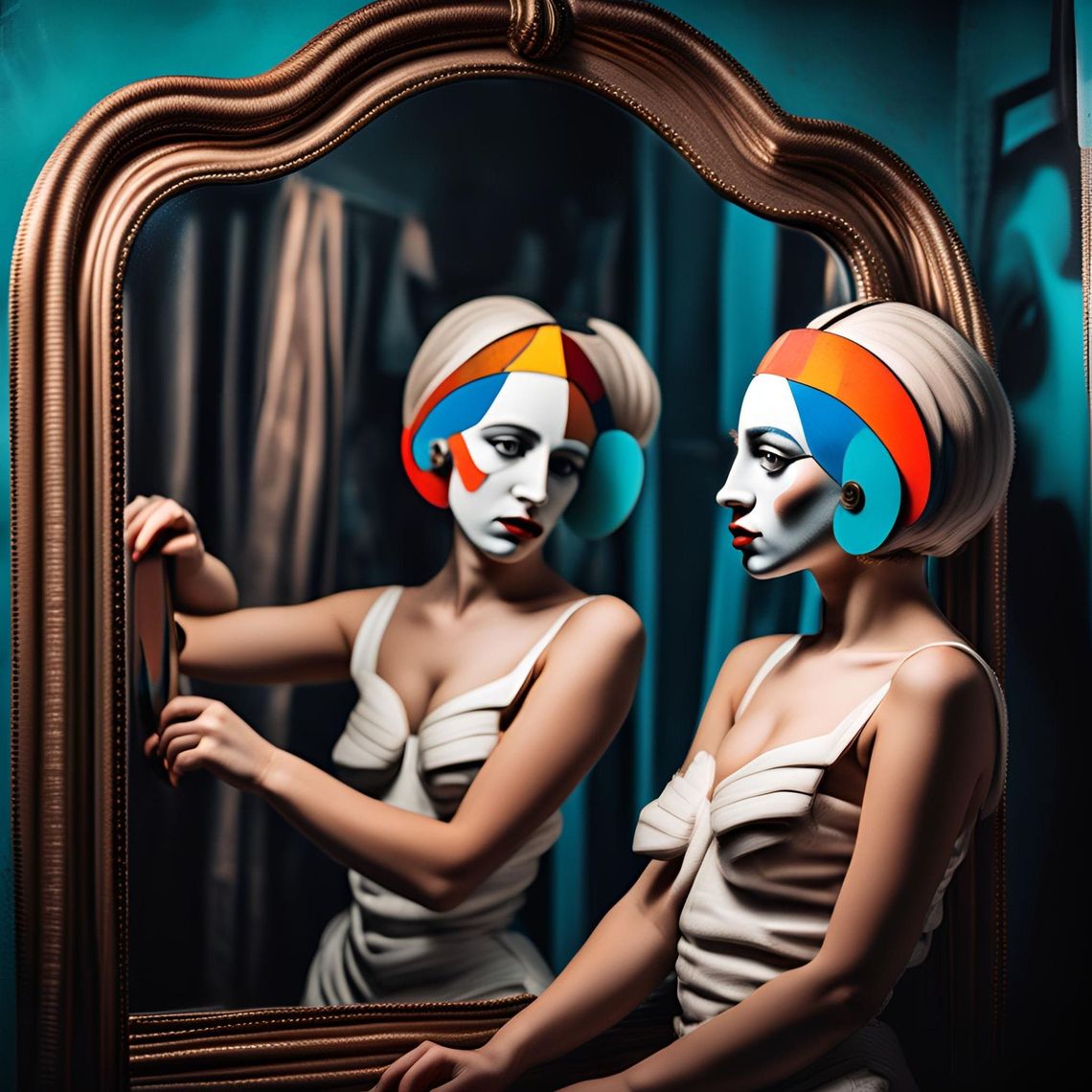
"Reflections of a Master: An In-Depth Exploration of Picasso's 'Girl Before a Mirror'"









Introduction to Picasso's 'Girl Before a Mirror'
Pablo Picasso's Girl Before a Mirror is one of the most celebrated masterpieces of the 20th century, embodying the artist's revolutionary approach to form, color, and symbolism. Created in 1932, this painting showcases not only Picasso's technical prowess but also his profound exploration of identity and self-perception. The work features a young woman gazing into a mirror, her reflection revealing an alternate version of herself that is both intriguing and unsettling. This duality invites viewers to contemplate themes of self-examination, transformation, and the complexities of femininity.
As one of the pivotal works in Picasso’s oeuvre, Girl Before a Mirror serves as a striking representation of his evolving style during the early years of the Surrealist movement. The painting encapsulates a moment in art history characterized by bold experimentation and a departure from traditional representation. It challenges the viewer's understanding of reality and perception, making it a rich subject for analysis and interpretation.
In this article, we will delve into the historical context surrounding the creation of Girl Before a Mirror, examine its intricate details and artistic elements, and explore its lasting legacy in the world of modern art. Through this exploration, we aim to uncover the layers of meaning embedded within this iconic work and highlight its enduring significance in both artistic and cultural realms.
Historical Context of the Painting
The Significance of the 1930s in Art
The 1930s marked a transformative period in the world of art, characterized by a myriad of movements and a growing exploration of modernism. Emerging from the tumultuous aftermath of World War I, artists began to grapple with the complexities of modern life, societal upheavals, and the shifting landscapes of culture and politics. This decade saw the rise of Surrealism, with its emphasis on dream-like imagery and the subconscious, challenging traditional perceptions of reality. Concurrently, the influence of Cubism, which had been pioneered in the early 20th century, continued to resonate, encouraging artists to deconstruct form and explore abstraction. Within this dynamic environment, Pablo Picasso's Girl Before a Mirror, created in 1932, stands as a vivid reflection of the era's stylistic innovations and emotional undercurrents.
Picasso's Life During the Creation of the Painting
By the time Picasso painted Girl Before a Mirror, he was already an established figure in the art world, revered for his contributions to Cubism and his ability to innovate continuously. The early 1930s were particularly significant for Picasso, both personally and artistically. He was involved in a passionate relationship with Dora Maar, a French photographer and painter who served as his muse during this period. Their tumultuous romance often influenced Picasso's work, infusing it with emotional depth and complexity. The painting itself can be interpreted as a reflection of his relationship with Maar, capturing her essence while also exploring themes of identity, femininity, and self-perception. This connection between the artist's life and his work is crucial to understanding the layered meanings within Girl Before a Mirror.
Influences from Other Artists and Movements
Picasso's artistic development during the 1930s was shaped by various influences, including the Surrealist movement, which sought to explore the irrational and the fantastical. While Picasso was not officially part of the Surrealist group, he shared their interest in the subconscious and often incorporated dream-like elements into his work. Additionally, the growing interest in African art and primitive styles continued to inform his approach to form and representation. The juxtaposition of the figure and the mirror in Girl Before a Mirror can be seen as a dialogue with these influences, as it not only captures the physical presence of the woman but also delves into the psychological complexities of her identity. Furthermore, the painting's bold use of color and form reflects the broader Modernist tendencies of the time, illustrating how Picasso navigated and synthesized various artistic currents to create a work that is both personal and universal.
In essence, the historical context surrounding Girl Before a Mirror reveals the interplay between Picasso's personal life, the broader art movements of the 1930s, and the significant cultural shifts of the time, setting the stage for a deeper understanding of this iconic work.
Analysis of the Artwork
Pablo Picasso's Girl Before a Mirror is not merely a visual feast; it is a multi-dimensional exploration of identity, perception, and the interplay between reality and artifice. This section delves into the elements that make this painting an enduring masterpiece.
Color Palette and Its Emotional Impact
The color palette of Girl Before a Mirror is both bold and evocative, utilizing a vivid array of hues that contribute to the painting's emotional depth. Dominated by blues, yellows, and reds, the colors work not only to capture the viewer's attention but also to convey a sense of duality. The warm tones surrounding the girl contrast sharply with the cooler shades of the mirror's reflection, suggesting a complex relationship between the self and the image perceived. The use of color also serves to express the psychological state of the figure; the vibrant yellows and reds evoke a sense of vitality and desire, while the cooler blues may signify introspection or even melancholy. This nuanced interplay of colors invites viewers to reflect on their own interpretations, enhancing the painting's emotional resonance.
Composition and Perspective in the Painting
Compositionally, Girl Before a Mirror stands out for its innovative use of space and perspective. The figure of the girl is placed at the forefront, her body twisting in a way that challenges traditional portrayals of femininity. This dynamic pose, combined with the reflective surface of the mirror, creates a sense of movement and tension that draws the viewer's eye across the canvas. The mirror itself is not just a passive object; it acts as a portal, revealing the girl’s inner self and inviting contemplation on the nature of identity. The asymmetrical arrangement of elements within the painting, coupled with Picasso's characteristic fragmented forms, disrupts conventional perspectives and encourages viewers to engage with the work in a more active manner. This innovative approach to composition reflects the broader avant-garde movements of the time, as artists sought to break free from traditional constraints.
Symbolism of the Mirror and the Figure
At the heart of Girl Before a Mirror lies the powerful symbolism of the mirror itself. Traditionally, mirrors have represented self-reflection and truth, but in Picasso's work, they take on a more complex role. The mirror not only reflects the girl’s external appearance but also hints at her inner turmoil and transformation. The duality of the figure—her physical form contrasted with the abstract representation in the mirror—suggests a conflict between how one perceives oneself and how one is perceived by others. This theme of duality is further accentuated by the inclusion of abstract shapes and colors that swirl around the figure, suggesting that identity is not static but rather fluid and multifaceted. The painting ultimately poses profound questions about self-perception, femininity, and the nature of reality, making it a rich subject for analysis and interpretation.
In conclusion, the analysis of Girl Before a Mirror reveals Picasso's masterful manipulation of color, composition, and symbolism. Each element operates in concert to create a complex narrative about identity and perception, ensuring that the painting resonates with audiences both at the time of its creation and today. This intricate interplay of artistic choices solidifies its status as a cornerstone of modern art.
Legacy and Influence
Impact on Modern Art and Artists
Picasso's Girl Before a Mirror has left an indelible mark on the trajectory of modern art. Its innovative use of form, color, and abstraction influenced a generation of artists who sought to explore the complexities of identity and perception. The painting’s bold colors and distorted figures paved the way for movements such as Abstract Expressionism and Surrealism, encouraging artists to break free from traditional representation. Notable figures like Joan Miró and Henri Matisse were inspired by Picasso's exploration of the subconscious and the interplay between reality and illusion. The painting's themes of duality and self-reflection resonate deeply in contemporary art practices, where many artists continue to engage with similar motifs.
Exhibitions and Public Reception Over Time
Since its completion in 1932, Girl Before a Mirror has been featured in numerous exhibitions around the world, solidifying its status as a cornerstone of 20th-century art. Its initial reception was a mix of admiration and bewilderment; critics were both captivated by and confused over its vibrant colors and abstract forms. Over the decades, as societal perspectives on art evolved, the painting garnered increasing acclaim. Major retrospectives of Picasso’s work have often included this piece, highlighting its significance in understanding not only the artist’s oeuvre but also the broader movements of the time. The painting's presence in prominent institutions, such as the Museum of Modern Art in New York, has further cemented its legacy, allowing new audiences to appreciate its complexity and emotional depth.
Cultural References in Literature and Media
The influence of Girl Before a Mirror extends beyond the confines of the art world into literature, film, and popular culture. Its themes of self-exploration and the nature of identity have been echoed in various literary works and films, where characters grapple with their own reflections, both literal and metaphorical. The painting has inspired poets and writers to delve into the intricacies of the human psyche, often referencing the mirror as a symbol of self-awareness and duality. In the realm of cinema, directors have drawn upon its visual language to explore themes of femininity and perception, using the mirror as a narrative device that challenges viewers to reconsider their understanding of identity. These cultural references ensure that Girl Before a Mirror remains a relevant touchstone for conversations about art, identity, and the human experience.
Conclusion: The Enduring Relevance of 'Girl Before a Mirror'
Pablo Picasso’s Girl Before a Mirror remains a profound emblem of the complexities of identity, self-perception, and transformation. Created during a pivotal moment in both the artist’s life and the broader art world, this painting encapsulates the essence of the human experience in ways that continue to resonate with audiences today. The vibrant colors, dynamic composition, and rich symbolism invite viewers to delve into their own reflections, challenging them to confront the multifaceted nature of selfhood.
As a significant work within the Cubist movement, Girl Before a Mirror has influenced countless modern artists and movements, encouraging new interpretations of form and narrative. Its impact is evident in the works of contemporary artists who explore identity and perception, often drawing inspiration from Picasso's innovative approach to visual storytelling. The painting’s exploration of duality—between reality and illusion, self and other—has also found its way into various cultural discourses, inspiring literature, film, and other artistic mediums that seek to unravel the complexities of the modern psyche.
Furthermore, the painting’s legacy is underscored by its continued presence in major exhibitions and art institutions, where it captivates new generations of viewers. Public reception has evolved over the decades, reflecting shifting societal attitudes toward gender, identity, and the role of art in expressing personal and collective narratives. As a result, Girl Before a Mirror serves not only as a remarkable artistic achievement but also as a mirror itself—a reflective surface through which society can examine and question its own evolving values and beliefs.
In conclusion, Picasso's Girl Before a Mirror transcends its original context, inviting ongoing dialogue about the nature of self and the complexities of human emotion. Its enduring relevance lies in its ability to engage with the viewer on both an emotional and intellectual level, making it a timeless piece that continues to inspire and provoke thought in an ever-changing world.