
"Exploring Picasso's 'The Three Musicians': A Masterpiece of Modern Art and Its Enduring Legacy"
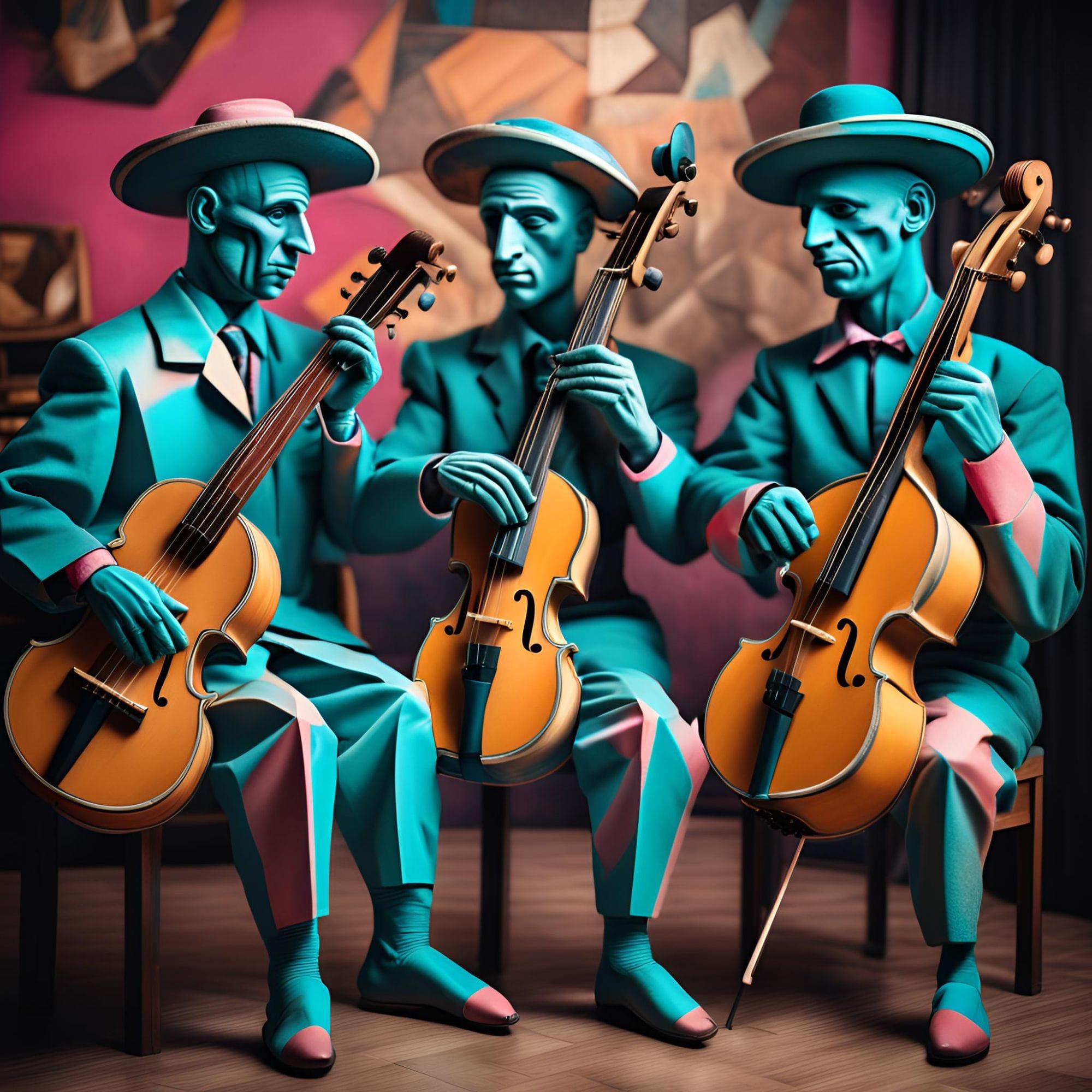
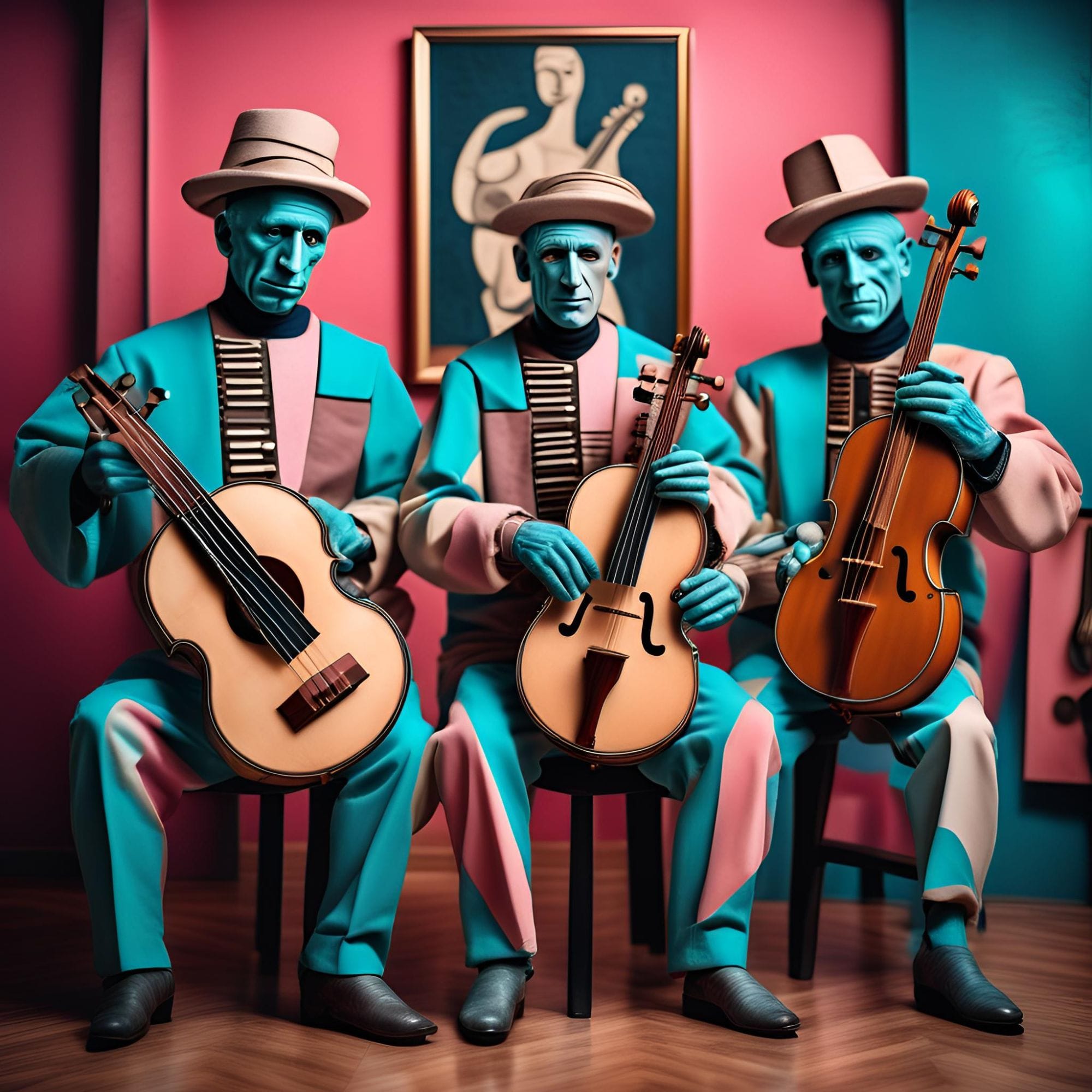
# Revised Article: The Significance of Picasso's "The Three Musicians"
Introduction to Picasso and His Influence on Modern Art
Pablo Picasso, one of the most celebrated artists of the 20th century, is often regarded as a pivotal figure in the development of modern art. Born in Málaga, Spain, in 1881, he exhibited prodigious talent from a young age, mastering various artistic styles that would later evolve into groundbreaking movements. Over his long and prolific career, Picasso explored diverse themes and mediums, ultimately co-founding the Cubist movement, which revolutionized the representation of reality in art.
Picasso's influence on modern art cannot be overstated. He challenged traditional notions of perspective and form, encouraging artists to break free from conventional boundaries and explore abstraction. His innovative approach to composition and color paved the way for numerous artistic movements that followed, including Surrealism and Abstract Expressionism. Through his work, Picasso not only redefined the visual language of art but also inspired generations of artists to experiment with their own interpretations of reality.
In addition to his stylistic innovations, Picasso's thematic explorations often delved into the complexities of human experience, love, and conflict, making his work resonate on a deeply emotional level. His ability to convey profound ideas through visual means has solidified his status as a cultural icon, influencing not just painters, but also sculptors, printmakers, and other creatives across various disciplines.
As we delve deeper into one of Picasso's iconic works, "The Three Musicians," we can better understand the synthesis of his artistic philosophy and the broader cultural context of the time. This painting serves as a testament to Picasso's enduring legacy and his pivotal role in shaping the trajectory of modern art, inviting viewers to engage with the vibrant interplay of forms, colors, and themes that characterize his oeuvre.
Analysis of 'The Three Musicians' Painting
Pablo Picasso's "The Three Musicians," painted in 1921, serves as a compelling exploration of form, color, and thematic depth. This section delves into the intricate details of the painting's composition, its color palette and techniques, as well as the rich symbolism that permeates the work.
Description of the Painting's Composition and Elements
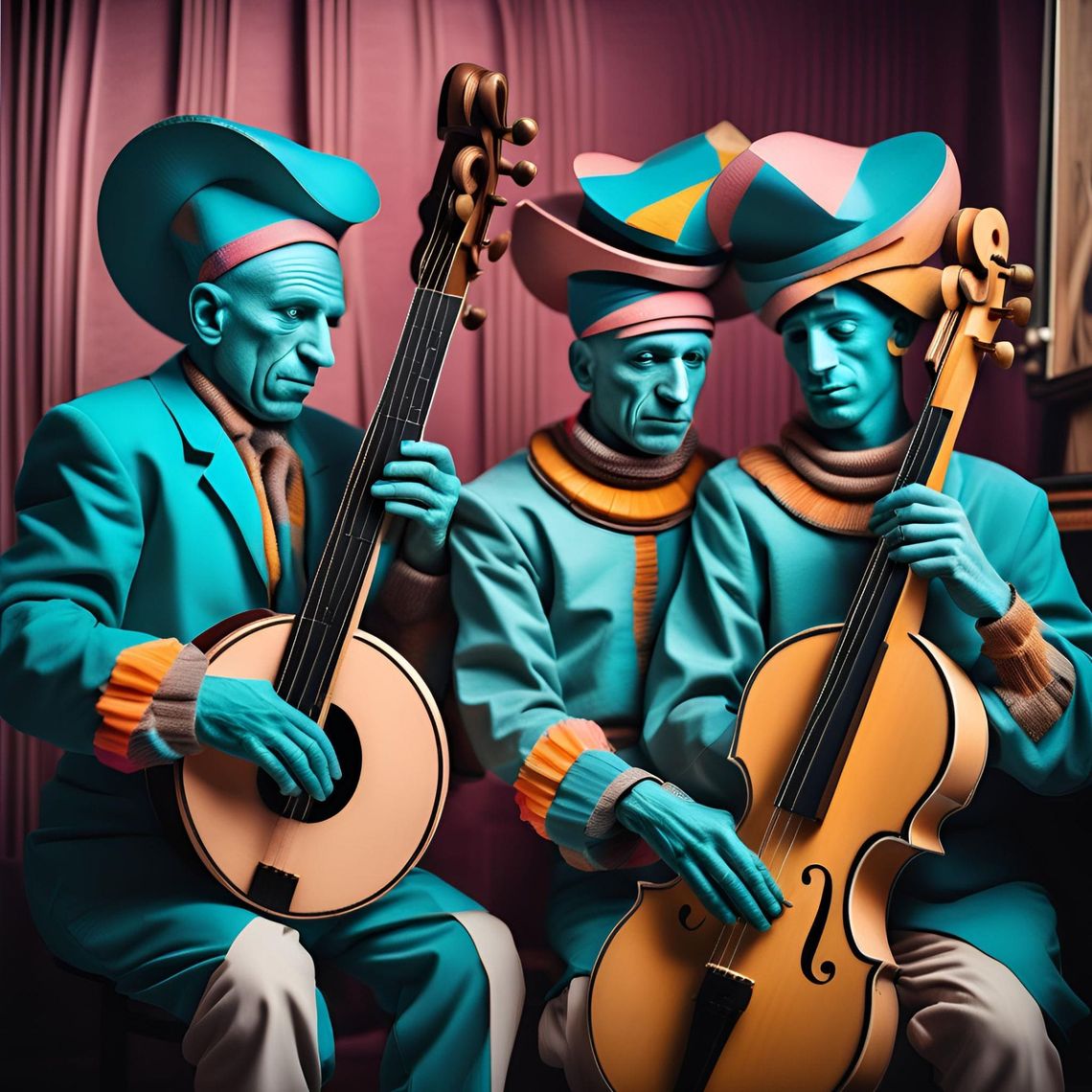
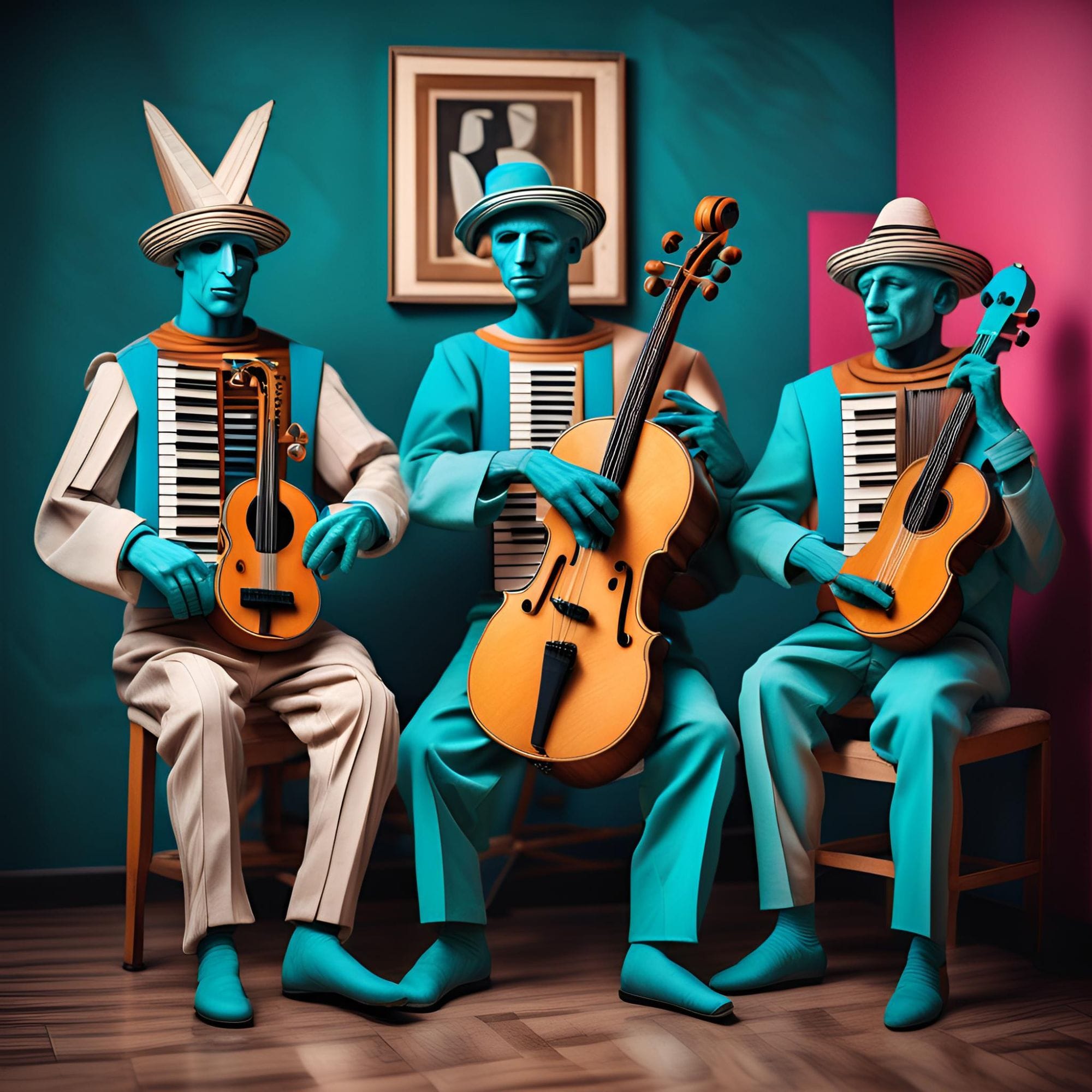
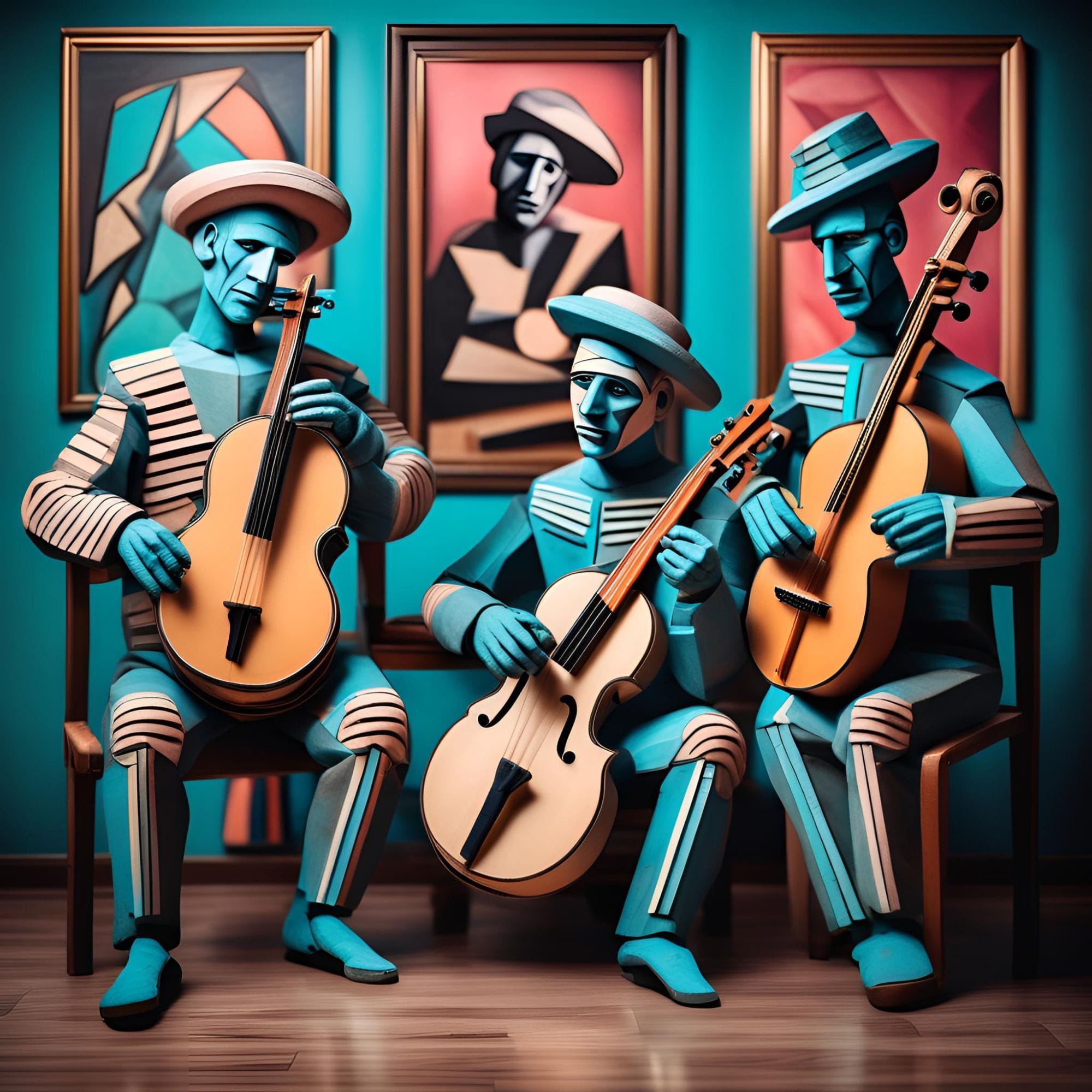
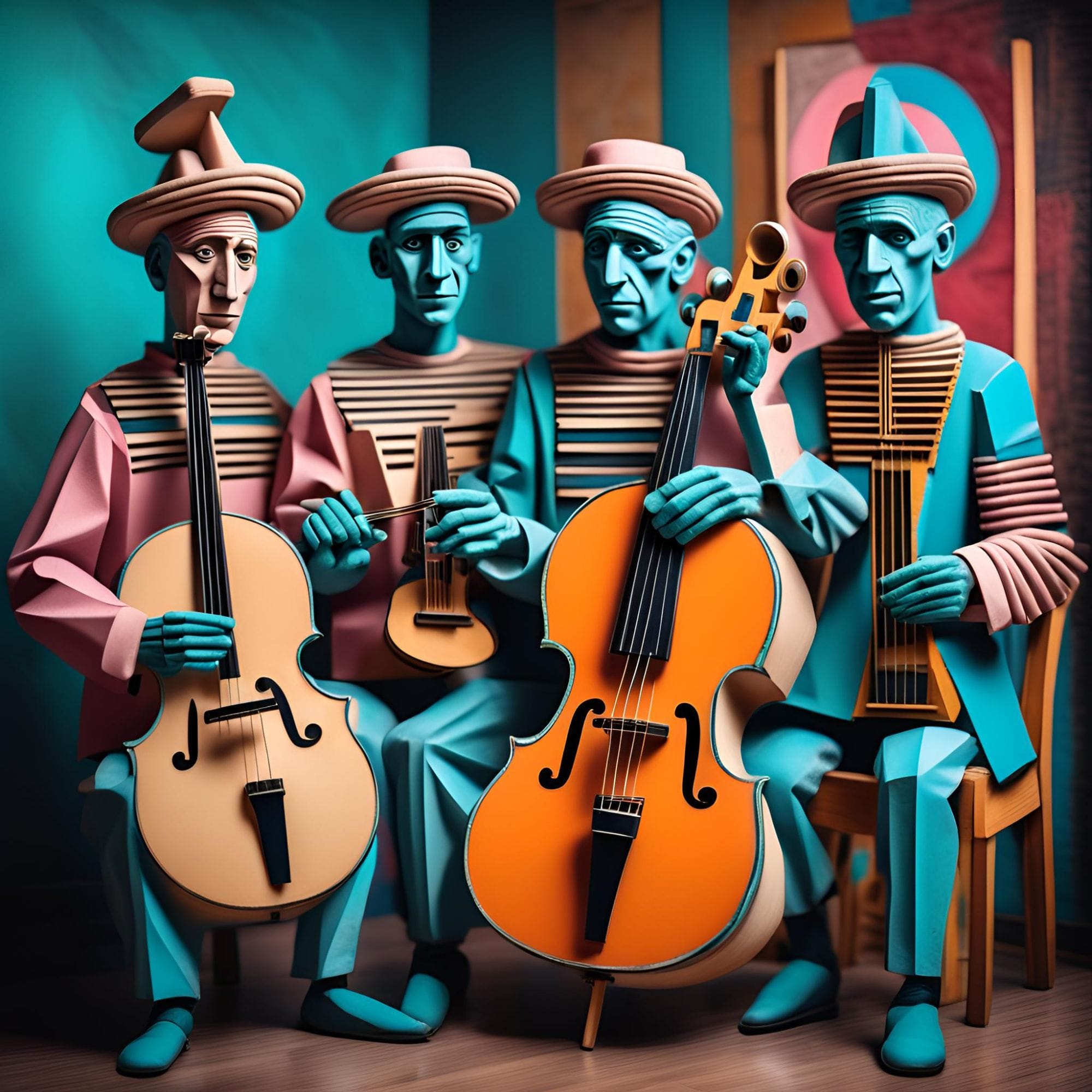
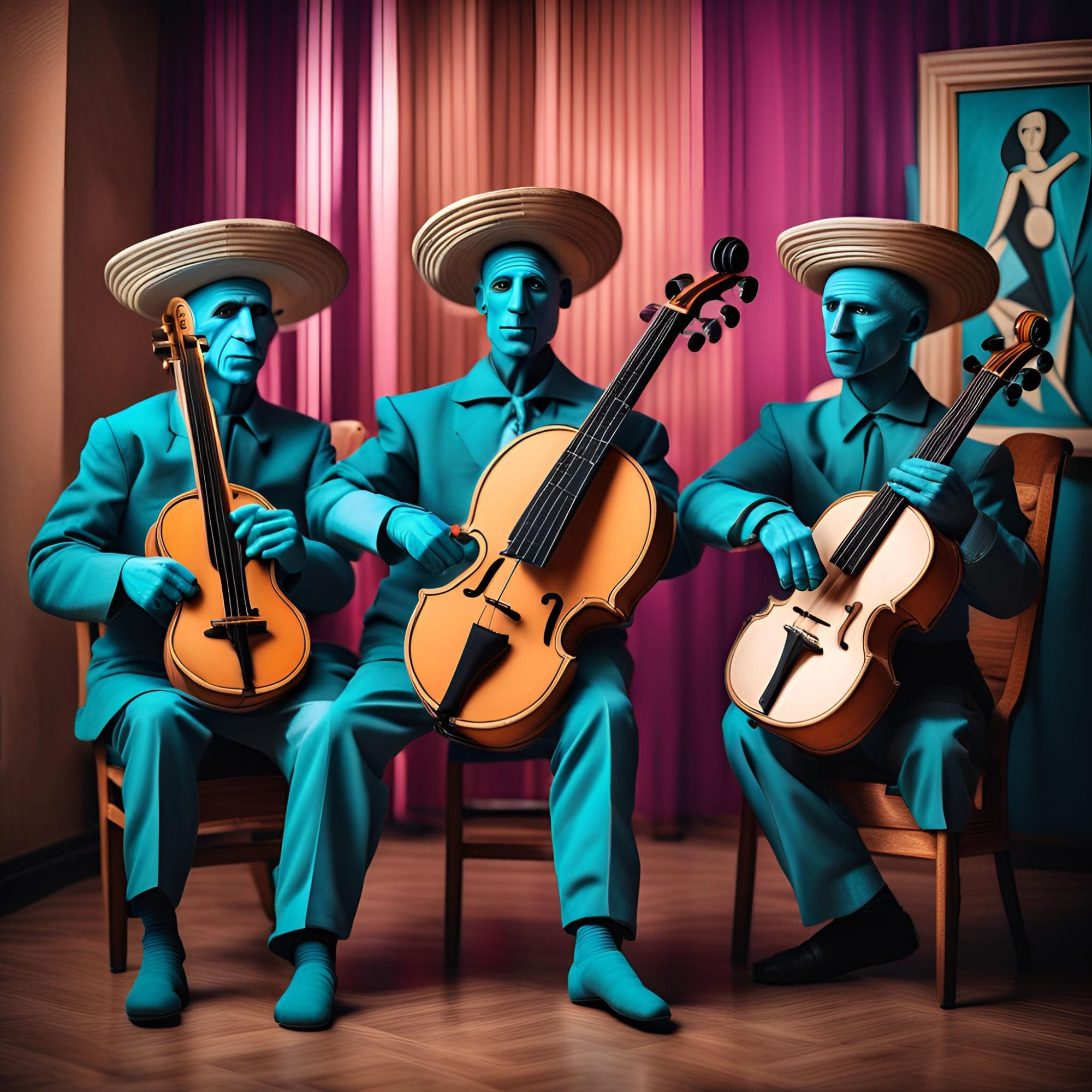
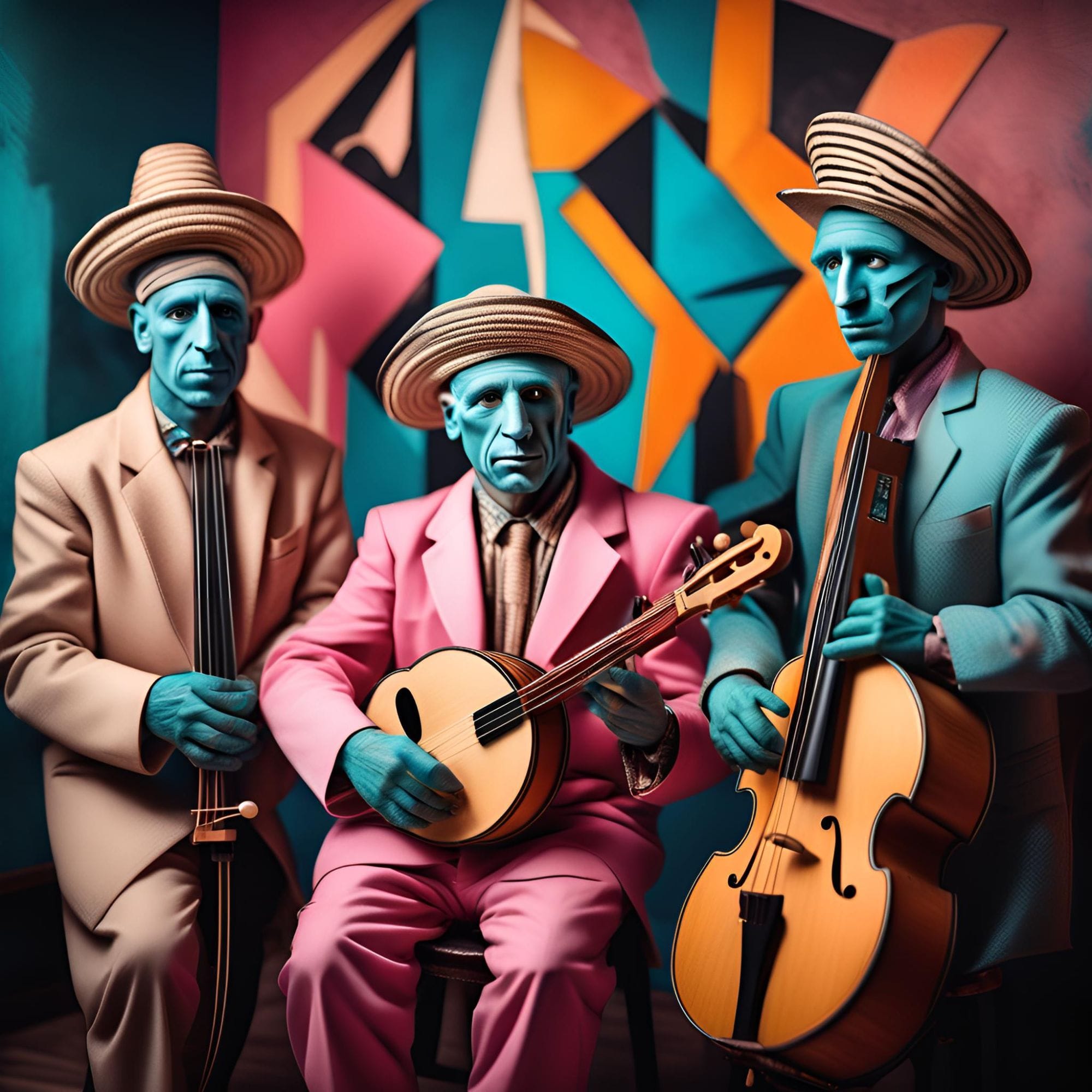
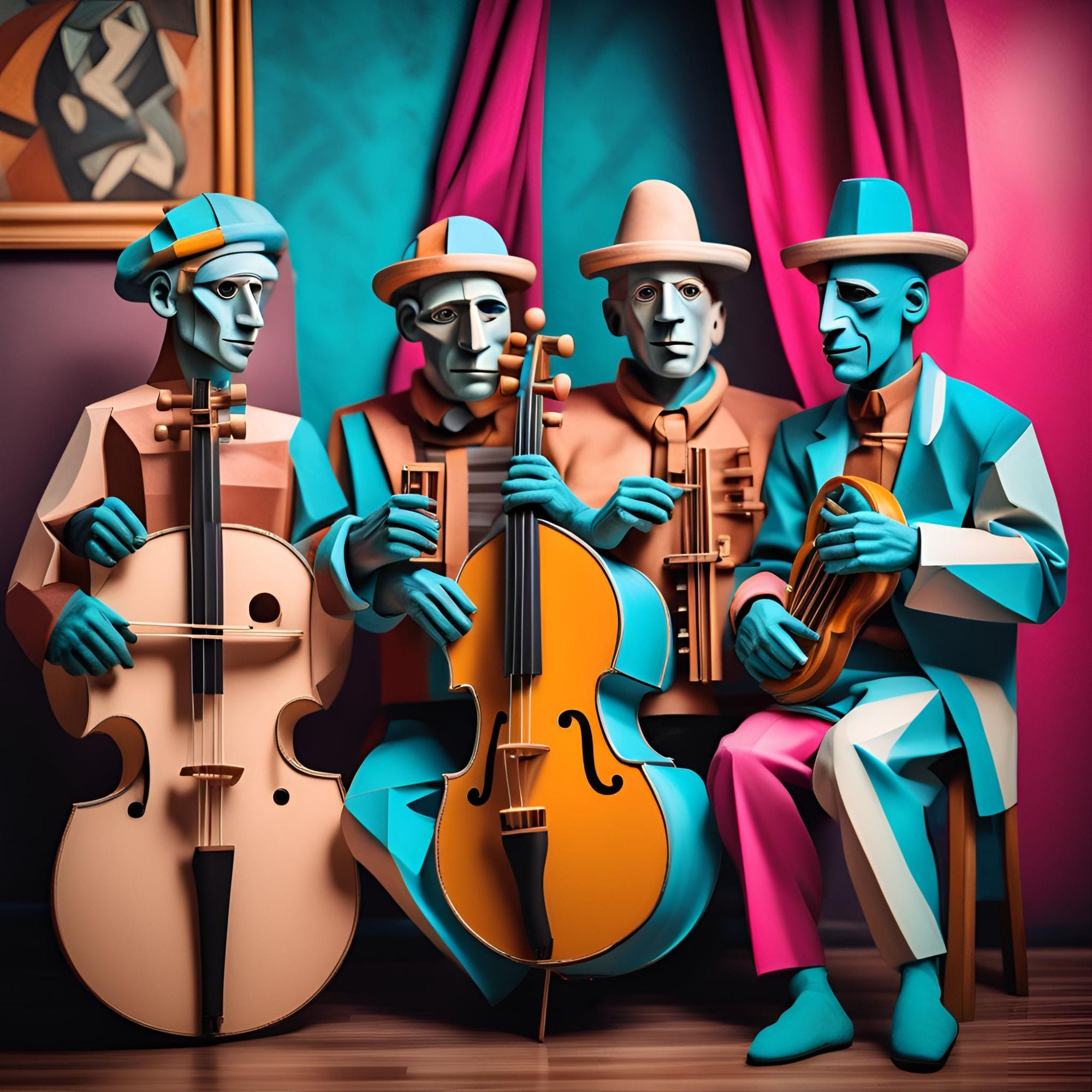
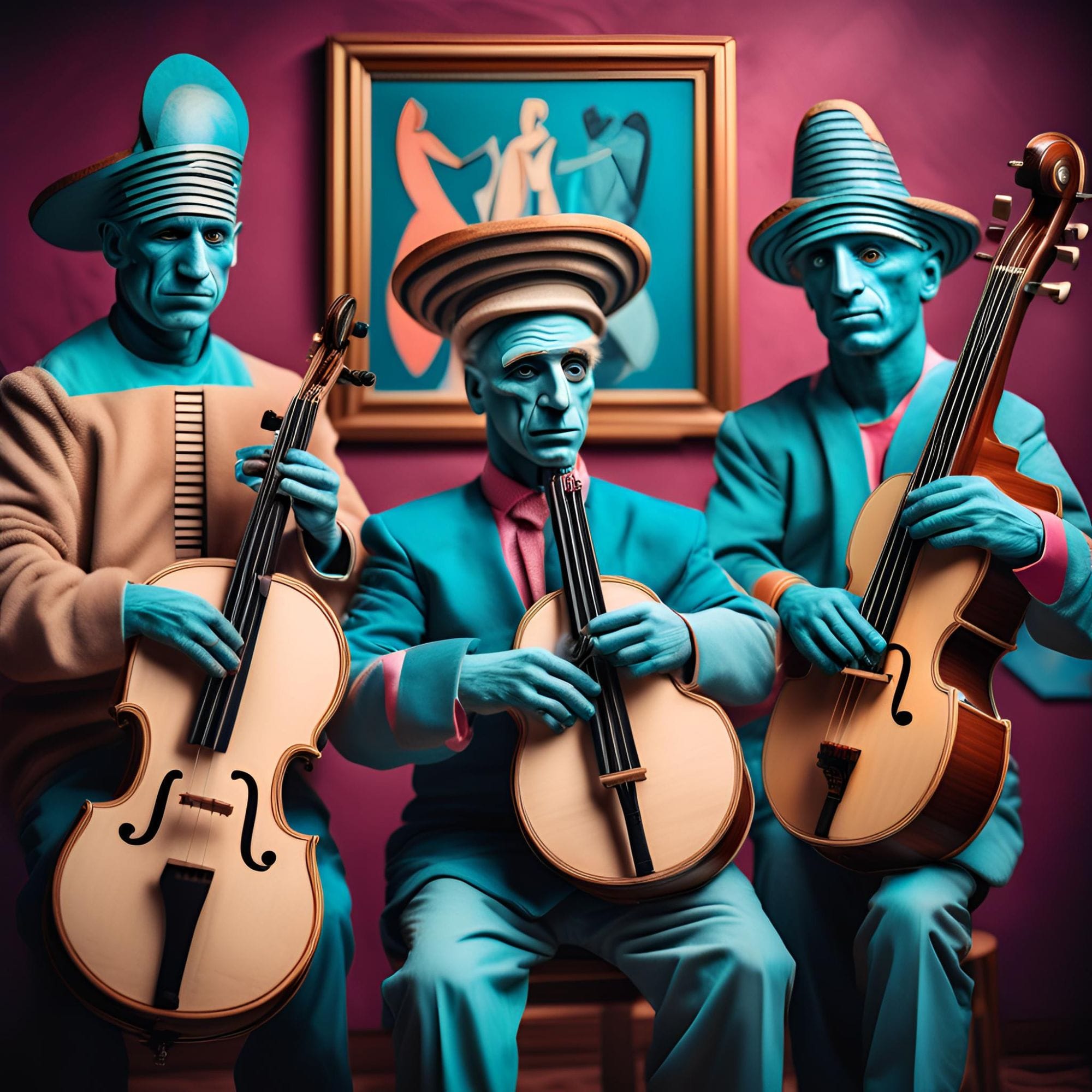
"The Three Musicians" presents a vibrant tableau featuring three figures—two musicians and a singer—arranged in a fragmented, collage-like manner typical of Picasso's synthetic cubism. The composition is centrally anchored by the musician on the left, who plays a guitar, while the figure on the right holds a clarinet, and the central figure, often interpreted as a singer, is depicted with a paper crown. Each figure is constructed from geometric shapes and bold outlines, creating a rhythmic interplay of forms and voids.
These figures are interwoven with their surroundings, which appears to be a patterned backdrop that enhances the overall dynamism of the scene. The overlapping and juxtaposition of the figures suggest a unity among the musicians, inviting viewers to explore the spatial depth of the painting. This integration of figures with the background exemplifies Picasso's innovative approach to space and perspective, breaking away from traditional representations in favor of a more abstract and layered interpretation.
Exploration of Color Palette and Artistic Techniques Used
The color palette of "The Three Musicians" is characterized by a harmonious blend of muted earth tones—ochres, browns, and greens—contrasted with bursts of brighter hues, such as reds and blues. This deliberate choice of colors not only emphasizes the figures but also evokes a sense of warmth and intimacy, reminiscent of a lively, yet intimate, musical gathering.
Picasso employs a variety of artistic techniques, including flattened forms and bold outlines, that enhance the overall structure of the composition. The incorporation of collage elements, such as patterned surfaces and textural contrasts, adds depth to the piece. This technique mirrors the layering of sounds in music, creating a visual rhythm that resonates with the viewer. Furthermore, the simplification of forms into basic geometric shapes showcases Picasso's departure from realism, embracing abstraction while still conveying the essence of the musicians and their instruments.
Interpretation of the Themes and Symbolism Present in the Artwork
At its core, "The Three Musicians" embodies themes of camaraderie, creativity, and the interplay between art forms. The three figures can be interpreted as embodiments of artistic expression—each musician representing a different aspect of creativity. The presence of the paper crown on the central figure hints at themes of performance and identity, suggesting that the act of making music transcends mere entertainment and becomes a form of self-representation.
Moreover, the painting juxtaposes the joy of music with the somber reality of the post-World War I era. The fragmented nature of the composition may symbolize the disarray and disillusionment experienced by many artists during this tumultuous time. Yet, despite the chaos, there is a sense of unity and harmony among the musicians, suggesting that art can serve as a means of healing and connection.
In essence, "The Three Musicians" is not merely a depiction of musicians at play; it is a multifaceted exploration of the artistic experience, encapsulating the spirit of collaboration and the transformative power of music in a world marked by uncertainty. Through this layered analysis, we begin to appreciate the depth of Picasso's work and its relevance within the broader context of art history.
Contextual Background of 'The Three Musicians'
Overview of the Period in Which Picasso Created the Work
'The Three Musicians' was completed in 1921, during a pivotal time in history marked by significant cultural and social upheaval. This era followed the end of World War I, a conflict that dramatically altered the landscape of Europe and influenced the lives of artists, including Picasso. The early 1920s were characterized by a search for new forms of expression as artists sought to process the trauma and disillusionment brought about by the war. For Picasso, this period was also a time of experimentation with style and medium, reflecting his desire to break away from traditional artistic conventions and to explore the potential of abstraction and collage.
Discussion of Influences from Other Artists and Movements
Picasso's 'The Three Musicians' is deeply rooted in the influences of the Cubist movement, which he co-founded with Georges Braque in the early 20th century. The painting showcases the hallmark characteristics of Cubism, including fragmented forms and the use of geometric shapes to represent subjects. Additionally, the work draws inspiration from African art and Iberian sculpture, both of which profoundly impacted Picasso's stylistic development. The use of flat planes and bold outlines in 'The Three Musicians' reflects the influence of these artistic traditions, as well as the broader context of modernism that sought to redefine the boundaries of visual representation.
Impact of World War I on Picasso's Artistic Expression
The aftermath of World War I had a significant impact on Picasso's artistic expression, leading him to explore themes of identity, duality, and the human experience. The war not only resulted in immense loss and suffering but also fostered a sense of disillusionment with the values and ideologies that had led to such devastation. In 'The Three Musicians', Picasso's choice to depict musicians—a symbol of joy and creativity—contrasts with the somber realities of the world outside. This juxtaposition reflects a desire to reclaim a sense of normalcy and celebration through art, even amidst the chaos of the time.
Additionally, the painting's playful composition and vibrant colors can be seen as a response to the darker aspects of post-war life, illustrating Picasso's ability to navigate complex emotions through his work.
Through understanding the contextual background of 'The Three Musicians', we gain insight into the myriad influences that shaped Picasso's creative vision and the broader significance of the painting within the tumultuous landscape of the early 20th century.
Legacy of 'The Three Musicians' in Contemporary Art
The legacy of Pablo Picasso's 'The Three Musicians' extends far beyond its initial unveiling in the early 20th century, continuing to resonate within the realms of contemporary art. Its bold approach to form and color has influenced countless artists and movements, cementing its status as a pivotal work in the evolution of modern artistic expression.
Influence on Future Generations of Artists
Picasso's innovative techniques in 'The Three Musicians' have inspired a myriad of artists across various disciplines. The painting's distinctive Cubist representation has encouraged subsequent generations to explore abstraction and fragmented forms in their own work. Artists such as Juan Gris, who was influenced by Picasso's synthetic Cubism, adopted similar compositional strategies while incorporating their unique perspectives. Additionally, the painting has served as a reference point for contemporary practitioners, including those in the realms of mixed media and digital art, who experiment with spatial dynamics and the interplay of multiple viewpoints.
Role in Art Exhibitions and Museums Today
'The Three Musicians' has become a cornerstone of numerous art exhibitions and remains a prized possession in the collections of major museums, including the Museum of Modern Art in New York. Its prominent display not only highlights Picasso's genius but also acts as a catalyst for discussions surrounding the evolution of artistic styles and the impact of historical contexts on artistic creation. As museums curate exhibitions that juxtapose Picasso's works with those of his contemporaries and successors, 'The Three Musicians' often emerges as a focal point, prompting viewers to examine the intricate dialogues between past and present art movements.
Public Perception and Interpretation Over the Decades
Over the decades, public perception of 'The Three Musicians' has evolved, reflecting broader societal changes and shifts in art criticism. Initially viewed through the lens of its revolutionary approach to form, the painting has since been interpreted through various cultural contexts, including postmodern critiques that emphasize the role of playfulness and irony in Picasso's work. Contemporary audiences are increasingly encouraged to engage with the painting not only as a historical artifact but as a living piece of art that continues to inspire dialogue about identity, culture, and the nature of artistic expression. This ongoing engagement underscores the painting's relevance in today's art world, where its themes of collaboration and creativity resonate with current discussions surrounding community and collective artistry.
In summary, the legacy of 'The Three Musicians' in contemporary art is characterized by its significant influence on future artists, its esteemed role in art institutions, and the evolving interpretations that continue to enrich the conversation about one of Picasso's most celebrated works.
Conclusion Summarizing the Significance of 'The Three Musicians'
In conclusion, Pablo Picasso's 'The Three Musicians' stands as a monumental work that encapsulates the essence of his innovative spirit and the transformative nature of modern art. Created during a pivotal moment in the early 20th century, this painting not only reflects Picasso's mastery of the Cubist style but also serves as a testament to his ability to convey complex themes through seemingly simple forms. The interplay of color, shape, and composition in 'The Three Musicians' invites viewers to engage with the artwork on multiple levels, prompting interpretations that span emotional, intellectual, and aesthetic dimensions.
The significance of 'The Three Musicians' extends beyond its visual impact; it is a piece that captures the zeitgeist of an era marked by upheaval and change. The influence of the painting can be seen in the works of subsequent generations of artists who have drawn inspiration from Picasso's bold experimentation and innovative techniques. Furthermore, the painting's continued presence in galleries and museums around the world speaks to its enduring relevance and the ongoing fascination it inspires among art lovers and scholars alike.
As public perception of Picasso's work has evolved, 'The Three Musicians' has remained a focal point for discussions about artistic expression and the role of art in society. Its rich layers of meaning and historical context make it a crucial subject of study within the broader narrative of modern art. Ultimately, 'The Three Musicians' not only exemplifies Picasso's groundbreaking contributions to the art world but also invites us to reflect on the interplay between creativity, culture, and the human experience.